

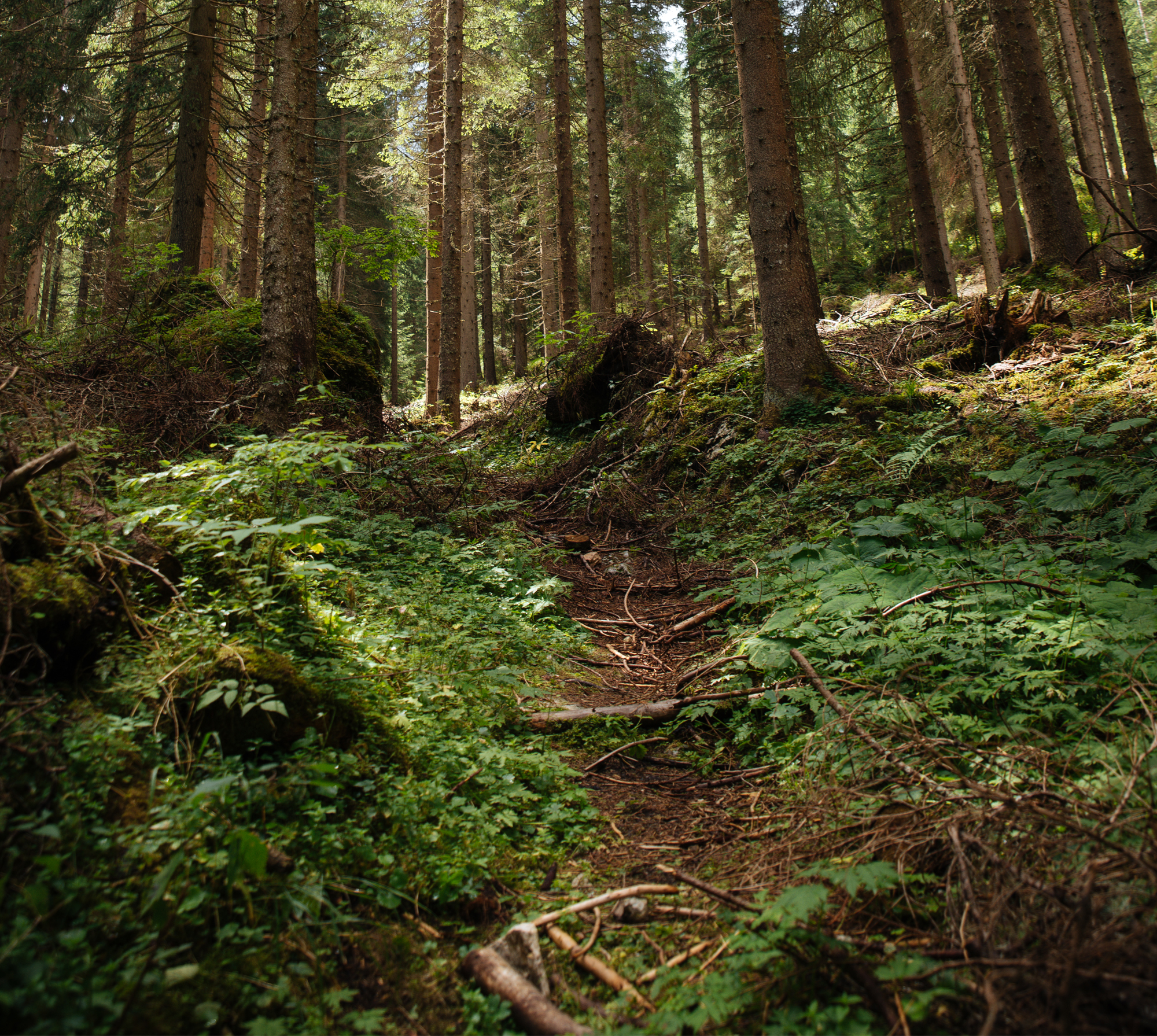
Health condition and features of growth of age-old oak forests of natural origin
Autorzy
-
Volodymyr Maliuha
National University of Life and Environmental Sciences of Ukraine, Forest Restoration and Meliorations Department
Kyiv, Ukraine -
Vasyl Yukhnovskyi
National University of Life and Environmental Sciences of Ukraine, Forest Restoration and Meliorations Department, Henerala Rodymtseva 19, 03041 Kyiv, Ukraine,
e-mail: yukhnov@ukr.net -
Victoria Minder
National University of Life and Environmental Sciences of Ukraine, Landscape Architecture and Phytodesign Department
Kyiv, Ukraine -
Vasyl Khryk
Bila Tserkva National Agrarian University, Forestry Department
Bila Tserkva, Ukraine -
Oleksandr Sytnyk
Bila Tserkva National Agrarian University, Forestry Department
Bila Tserkva, Ukraine -
Svitlana Levandovska
Bila Tserkva National Agrarian University, Forestry Department
Bila Tserkva, Ukraine - Ivan Kimeichuk Bila Tserkva National Agrarian University, Department of Forestry, Bila Tserkva, Ukraine
-
Yaroslav Krylov
National Academy of Sciences of Ukraine, Institute for Evolutionary Ecology
Kyiv, Ukraine -
Fedir Brovko
Taras Shevchenko National University, Department of Plant Biology
Kyiv, Ukraine
Abstract
The purpose of the work was to carry out comprehensive studies of the components of old oak forest stands to assess their health condition and growth characteristics. The research methodology involved obtaining biometric data, agrochemical properties of the soil and health characteristics of the stands. On four trial plots with an area of 7.5 ha, biometric indicators of 794 old oak trees were measured, and their distribution was carried out according to the degree of weakening and damage by phytopathological signs. The average age of the stands, which ranges from 200 to 214 years, was determined experimentally. Productivity of old oak stands ranges from 429 to 510 m3/ha. The results of the study showed that stands have different levels of resistance to the influence of harmful factors, such as rot, wood-destroying fungi, transverse oak cancer, frostbite and hollows in the trunk. Changes in climate, droughts, hydrological regime, invasions of leaf-gnawing pests and pathogens, etc. contributed to the weakening of old trees in different periods. The novelty of research is the development of a classification by growth and development of age-old oak stands of natural origin. A complete description of all components of the stands is given. The best soilimproving properties were found in the plot of 204-year-old stand, with available undergrowth of up to 20,000 units/ha and a litter stock of 7,984 kg/ha compared to the site where the undergrowth was up to 5,500 units/ha with a liter stock of 6,873 kg/ha. Therefore, the obtained data can be useful for monitoring the condition of oak stands, making decisions on the optimization of forestry measures in aged oak forests, managing forest resources effectively, preserving the biodiversity of the national forest fund and developing strategies for forest adaptation to climate change and other threats.
Keywords
| DOI | 10.2478/ffp-2025-0021 |
|---|---|
| Source | Folia Forestalia Polonica, Series A – Forestry, 2025, Vol. 67 (4), 265–278 |
| Print ISSN | |
| Online ISSN | 2199-5907 |
| Type of article | Original article |
| Original title | Health condition and features of growth of age-old oak forests of natural origin |
| Publisher | © 2025 Author(s). This is an open access article licensed under the Creative Commons Attribution-NonCommercial-NoDerivs License (http://creativecommons.org/licenses/by-nc-nd/4.0 |
| Date | 09/12/2025 |
- Raček M., Lichtnerová H., Kubus M., Iľko I. Responses of Ginkgo biloba to water stress
- Wysocka-Fijorek E., Mohytych V., Gołos P., Karaszewski Z., Gil W. Do private forest owners in Poland recognise Natura 2000 areas?
- Shlapak V., Mostoviak I., Adamenko S., Pushka I., Komisarenko N., Yarosh M. Silvicultural characteristics of medieval 40–50-year-old stands of pedunculate oak in Bilohrudivsky Forest
- Maliuha V., Yukhnovskyi V., Minder V., Khryk V., Sytnyk O., Levandovska S., Kimeichuk I., Krylov Y., Brovko F. Health condition and features of growth of age-old oak forests of natural origin
- Szczygieł R., Kwiatkowski M. The economic aspect of establishing fire breaks along public roads and reducing the losses caused by forest fires
- Ciurzycki W., Szczepkowski A., Artur Obidziński A., Marciszewska K. Botanical and mycological research of the Bielański Forest (Central Poland) during the twentieth century and current times
- Szczygieł R., Tyburski Ł., Kwiatkowski M., Czubak D. Controlled burning as an active method of protecting heathlands – methodology of the procedure
- Dobies T., Jagodziński A., Kałucka I., Kasprowicz M., Wojterska M., Sławska M., Wierzbicka A., Łabędzki A., Nowiński M., Małek S., Karolewski P., Oleksyn J., Banaszczak P., Malica J., Skorupski M. Plants, fungi, and invertebrates of Northern red oak (Quercus rubra L.) experimental stands in Rogów Arboretum (Poland)
- Pluta P., Tomusiak R., Obidziński A. The impact of participation in Forestry Students’ Scientific Association of Warsaw University of Life Sciences on professional and personal development of students