

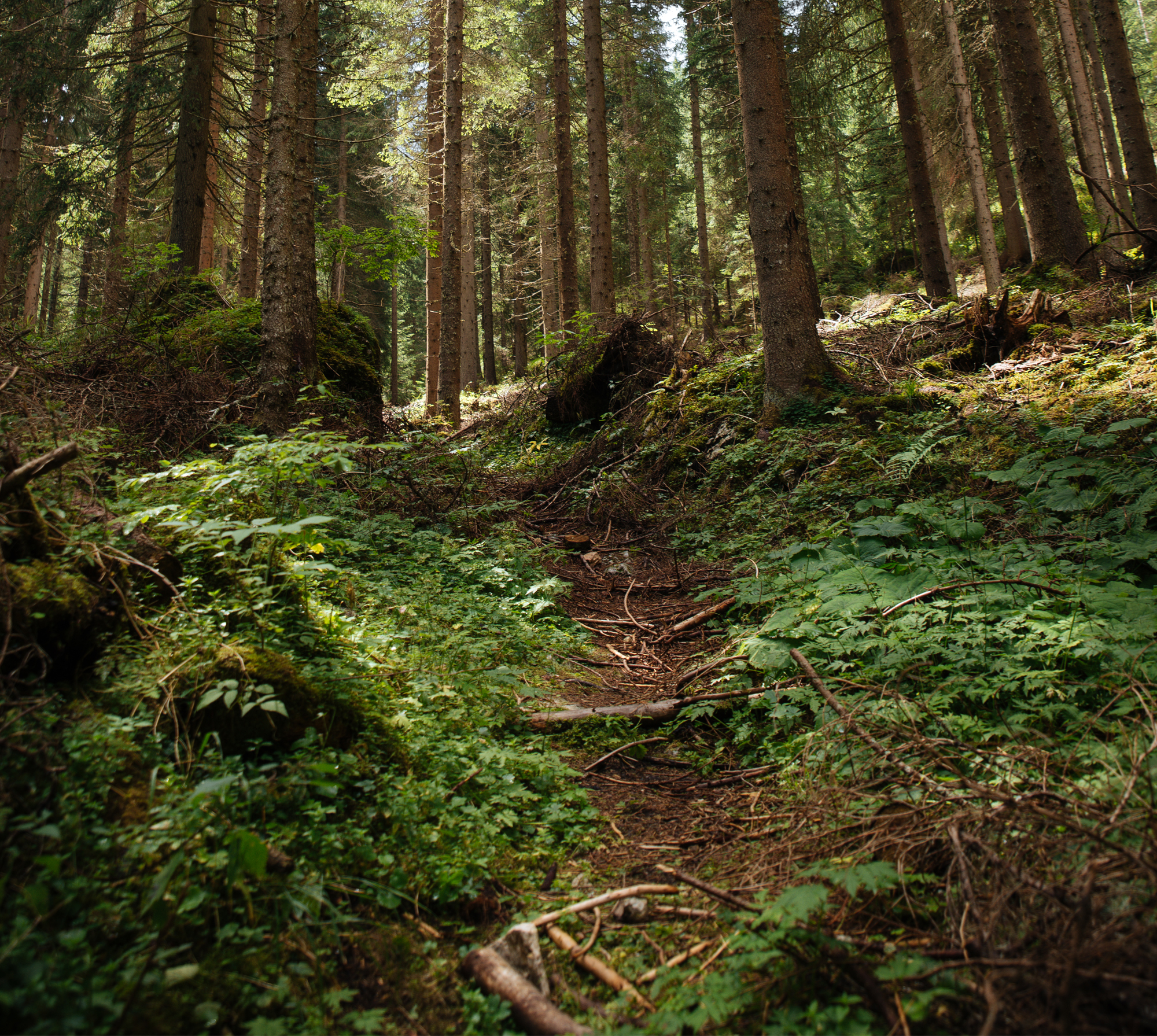
Reconstructing the origin of silver fir (Abies alba Mill.) stands in the Białowieża Forest
Autorzy
-
Aleh Marozau
Białystok University of Technology, Institute of Forest Sciences
17-200 Hajnówka, Piłsudskiego 1A, Poland
e-mail: a.marozau@pb.edu.pl - Tomasz Oszako Forest Research Institute, Department of Forest Protection, Sękocin Stary, Braci Leśnej 3, 05-090 Raszyn, Poland
-
Piotr Borowik
Forest Research Institute, Department of Forest Protection
Sękocin Stary, Braci Leśnej 3, 05-090 Raszyn, Poland -
Justyna Anna Nowakowska
Cardinal Stefan Wyszynski University in Warsaw, Faculty of Biology and Environmental Sciences
Warsaw, Poland
Abstract
The Białowieża Forest, one of the largest and best-preserved forest complexes in Europe, is located outside the continuous distribution range of silver fir (Abies alba). The area hosts several artificial stands of this species, including old stands that are in good condition. The aim of this study was to reconstruct their origin and establishment conditions. In the Polish part of the Białowieża Forest, 13 sites with the presence of silver fir were identified and described, including 9 old stands. These sites share three key features: anthropogenic origin, generally minimal human intervention in their growth and development after establishment, and location outside the continuous distribution range of the species. Analyses of dendrometric traits showed that many trees reach parameters comparable to those observed under optimal conditions within the natural distribution range of silver fir. Historical reconstruction suggests that the stands most likely originated from direct seeding on clear-cuts created during intensive logging by The Century European Timber Corporation Ltd. in the interwar period (1924–1929). Based on silvicultural, historical and ecological arguments, it appears highly unlikely that silver fir planting stock was produced and used at that time in the Białowieża Forest. The hypothesis proposed here assumes that silver fir seeds were sown under the developing canopy of secondary-succession pioneer species. The surviving old trees and their progeny show a high degree of adaptation to the continental climate of north-eastern Poland. The origin of these stands should be further verified by comparative genetic studies of silver fir populations in Europe and Poland.
Keywords
| DOI | 10.2478/ffp-2026-0002 |
|---|---|
| Source | Folia Forestalia Polonica, Series A – Forestry, 2026, Vol. 68 (1), 9–20 |
| Print ISSN | |
| Online ISSN | 2199-5907 |
| Type of article | Original article |
| Original title | Reconstructing the origin of silver fir (Abies alba Mill.) stands in the Białowieża Forest |
| Publisher | © 2026 Author(s). This is an open access article licensed under the Creative Commons Attribution-NonCommercial-NoDerivs License (http://creativecommons.org/licenses/by-nc-nd/4.0 |
| Date | 17/03/2026 |
- Hurzhii R., Sydorenko S., Levchenko V., Lashchenko A., Sydorenko S. Dynamics of surface fuel accumulation in Scots pine (Pinus sylvestris L.) forests of green zones of the cities of Kyiv and Kharkiv
- Marozau A., Oszako T., Borowik P., Nowakowska J. Reconstructing the origin of silver fir (Abies alba Mill.) stands in the Białowieża Forest
- Zhezhkun А., Zhezhkun I., Kubrakov S. Silvicultural and economic aspects of forest regeneration in the Eastern Polissya Region of Ukraine
- Kozak I., Kociuba P., Mylenka M., Gniezdilova V., Riznychuk N. Decrease in forest above-ground biomass in war-damaged forests of Ukraine: A case study using GE DI, Sentinel-2 data, and the GEE platform
- Sztabkowski K., Burzyńska I., Gil W. The condition of forest soils in central and northern Poland in the decade 2007–2017 based on selected indicators