

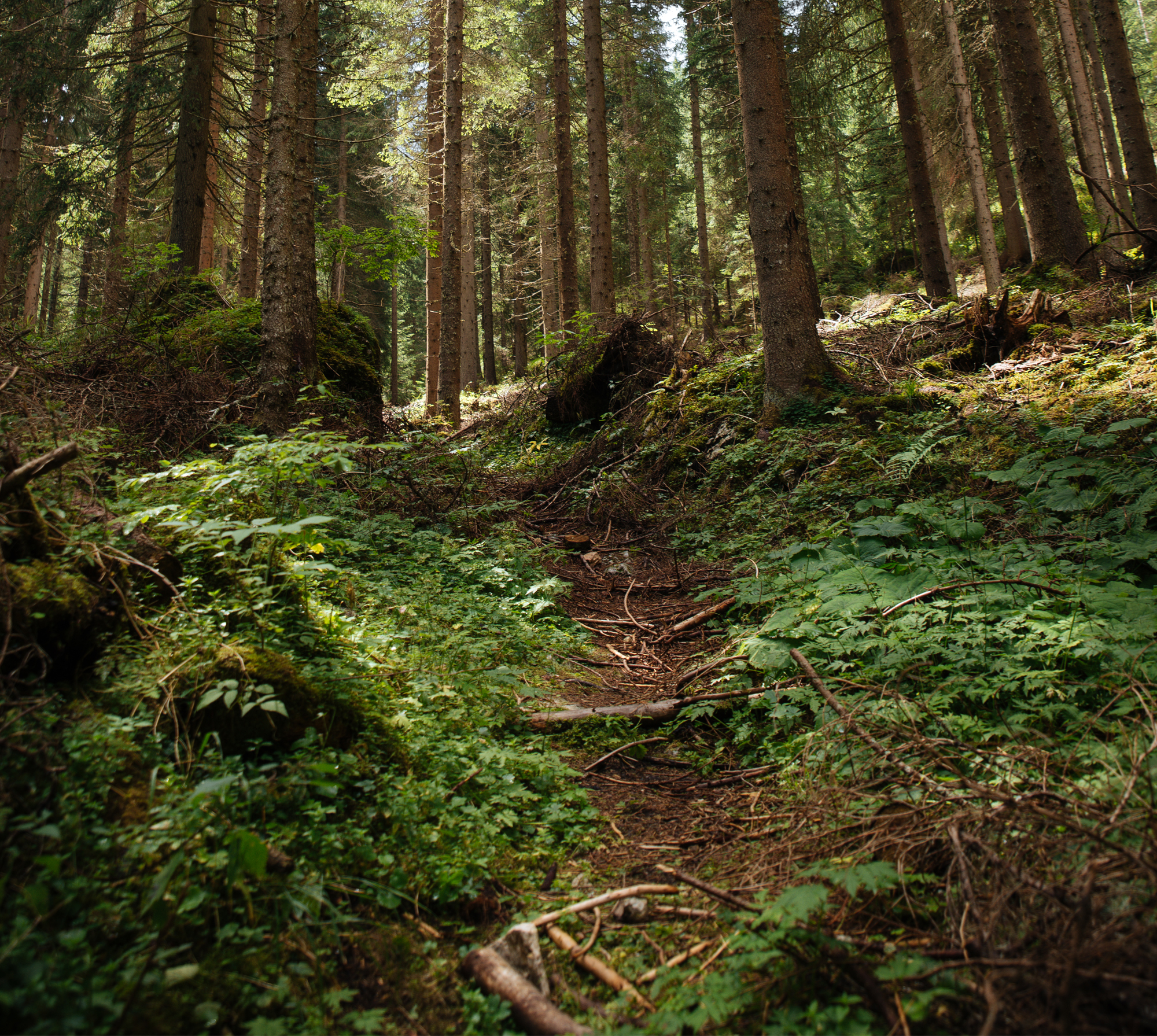
Kózkowate (Coleoptera: Cerambycidae) Biebrzańskiego Parku Narodowego i jego otuliny
Longhorn beetles (Coleoptera: Cerambycidae) of the Biebrza National Park and its buffer zone
Autorzy
-
Jerzy M. Gutowski
Instytut Badawczy Leśnictwa, Zakład Lasów Naturalnych, ul. Park Dyrekcyjny 6, 17-230 Białowieża;
Tel. 48 85 6812396, e-mail: j.gutowski@ibles.waw.pl -
Jacek Hilszczański
Zakład Ochrony Lasu
Instytut Badawczy Leśnictwa
Sękocin Stary, ul. Braci Leśnej 3
05-090 Raszyn -
Jacek Kurzawa
ul. dr. Seweryna Sterlinga 2/10
97-200 Tomaszów Mazowiecki -
Andrzej Lasoń
Muzeum Górnośląskie w Bytomiu, Dział Przyrody
pl. Jana III Sobieskiego
41-902 Bytom -
Radosław Plewa
Instytut Badawczy Leśnictwa, Zakład Ochrony Lasu
Sękocin Stary, ul. Braci Leśnej 3, 05-090 Raszyn -
Paweł Górski
Szkoła Główna Gospodarstwa Wiejskiego
Wydział Medycyny Weterynaryjnej
Katedra Nauk Przedklinicznych,
Zakład Parazytologii i Chorób Inwazyjnych
Ciszewskiego 8, 02-786 Warszawa -
Wojciech Jędryczkowski
ul. Sucharskiego 3/93
01-390 Warszawa - Roman Królik Nadleśnictwo Kluczbork, ul. Mickiewicza 8, 46-200 Kluczbork;
-
Jan Tatur-Dytkowski
ul. Wąwozowa 4/17
02-796 Warszawa
Abstrakt
The aim of this study was to investigate the distribution, habitat preferences, host plants, and other aspects of the biology of longhorn beetles, as well as to identify threats to individual species and propose measures for their mitigation within the Biebrza Valley, particularly in Biebrza National Park (BbNP).
The paper presents the results of field research conducted between 1982 and 2025 (with periodic breaks) in the Biebrza Valley (NE Poland). A total of 95 Cerambycidae species were recorded in the study area, representing 48% of the Polish longhorn beetle fauna. Ninety-two species were found within the BbNP boundaries, while three species were recorded from its buffer zone exclusively. The highest species richness was observed in the Middle Basin (83 species) and the Lower Basin (78 species), whereas the Upper Basin yielded 54 species. The most widely distributed species was Strangalia attenuata, recorded in sixteen UTM squares (10×10 km) and common in all three Biebrza basins. Stenurella nigra occurred in fourteen squares, while Grammoptera ruficornis, Rhagium mordax, and S. melanura were found in thirteen squares. Among the longhorn beetle species identified in the Biebrza Valley, eleven were classified as very rare and should be considered as „species of special concern”. These included Cerambyx scopolii, Cyrtoclytus capra, Molorchus marmottani, Euracmaeops septentrionis, Leptura thoracica, Lepturalia nigripes, Aegomorphus obscurior, Exocentrus stierlini, Oberea euphorbiae, O. pupillata, and Saperda similis.
Among all recorded cerambycid species, 76 were documented based on rearing from plant material (dead wood, twigs etc.) of various host plants. These comprised 24 plant species: 21 woody plants – trees and shrubs – and three herbaceous species. Broad-leaved trees and shrubs were dominant, as only two coniferous species (Pinus sylvestris and Picea abies) were confirmed as hosts.The highest number of species developed on Quercus robur (23), followed by P. sylvestris and P. abies (17), Salix spp. (12), Betulapendula and Alnus glutinosa (11 each). Other plant species hosted between one and nine Cerambycidae species. The species withthe broadest host plant range were Rhagium mordax (eight species), Saperda scalaris (six), and both Anaesthetis Testaceaand S. attenuata (five each). Noteworthy host associations included Clytus arietis on Frangula alnus, A. obscurior on A. glutinosa,and Exocentrus punctipennis on Q. robur.
Two species found in the Biebrza Valley – C. scopolii and L. thoracica – are under partial protection in Poland. Several other species are included in the Polish Red List of Threatened and Endangered Animals, including L. nigripes, classified as Critically Endangered (CR), and L. thoracica as Vulnerable (VU). L. thoracica is also listed among the relic saproxylic beetles of Central Europe in the group of relics sensu stricto. No major threats have been identified for most saproxylic Cerambycidae species, with one exception. Comparison of recent data (2021–2025) with earlier records (1982–2011) has revealed concerning signs of a declining trend in the local population of A. obscurior.
Threats were also identified for certain species developing in herbaceous plants. These include:
−ecological succession (encroachment of woody vegetation in open areas leading to increased shading), accelerated by drainageand lowering of groundwater levels; a threat to, for example, Agapanthia intermedia, O. euphorbiae, and Phytoecia virgula;
−lack of suitable host trees or shrubs for infestation, such as sun-exposed oaks (A. obscurior, C. scopolii), fire weakened/killedbirches (L. nigripes), and old honeysuckle shrubs (O. pupillata);
−disruption in the continuity and regeneration of host plants, potentially leading to the degradation of breeding habitats,especially for A. obscurior and, to a lesser extent, for C. scopolii, which can develop in other tree species;
−small population size and isolation, which pose threats for species such as C. scopolii, L. nigripes, and O. euphorbiae;entomological poachin;
−illegal collection of imagines or larvae with their host material (infested wood) of collector-attractive species. Documentedcases include attempts at illegall collection of A. obscurior.
For certain species (e.g. A. obscurior, C. scopolii, L. nigripes), active conservation measures are essential to preserve theirpopulations. For most saproxylic species, passive conservation is highly effective if the protected area is sufficiently large. It is recommended that such protection be implemented in forests with a natural or near-natural character, or in those with the potential to become natural (e.g. parts of the Grzędy forest, the Las Trzyrzeczki tree stand, and the Kopciowe complex). The immediate acquisition of ecologically valuable areas (sites of rare Coleoptera occurrence) currently in private or military ownership within or around BbNP is strongly advised. Monitoring is proposed for one saproxylic beetle species (C. capra) and one species developing in herbaceous plants (O. euphorbiae).
Słowa kluczowe
| DOI | 10.48538/lpb-2026-0001 |
|---|---|
| Source | Leśne Prace Badawcze / Forest Research Papers, 2025, Vol. 86: 1-27 |
| Print ISSN | |
| Online ISSN | 2082-8926 |
| Type of article | Original research article |
| Original title | Kózkowate (Coleoptera: Cerambycidae) Biebrzańskiego Parku Narodowego i jego otuliny |
| Publisher | © 2026 Author(s). This is an open access article licensed under the Creative Commons Attribution-NonCommercial-NoDerivs License (http://creativecommons.org/licenses/by-nc-nd/4.0/) |
| Date | 2 February 2026 |
- Gutowski J., Hilszczański J., Kurzawa J., Lasoń A., Plewa R., Górski P., Jędryczkowski W., Królik R., Tatur-Dytkowski J. Kózkowate (Coleoptera: Cerambycidae) Biebrzańskiego Parku Narodowego i jego otuliny