

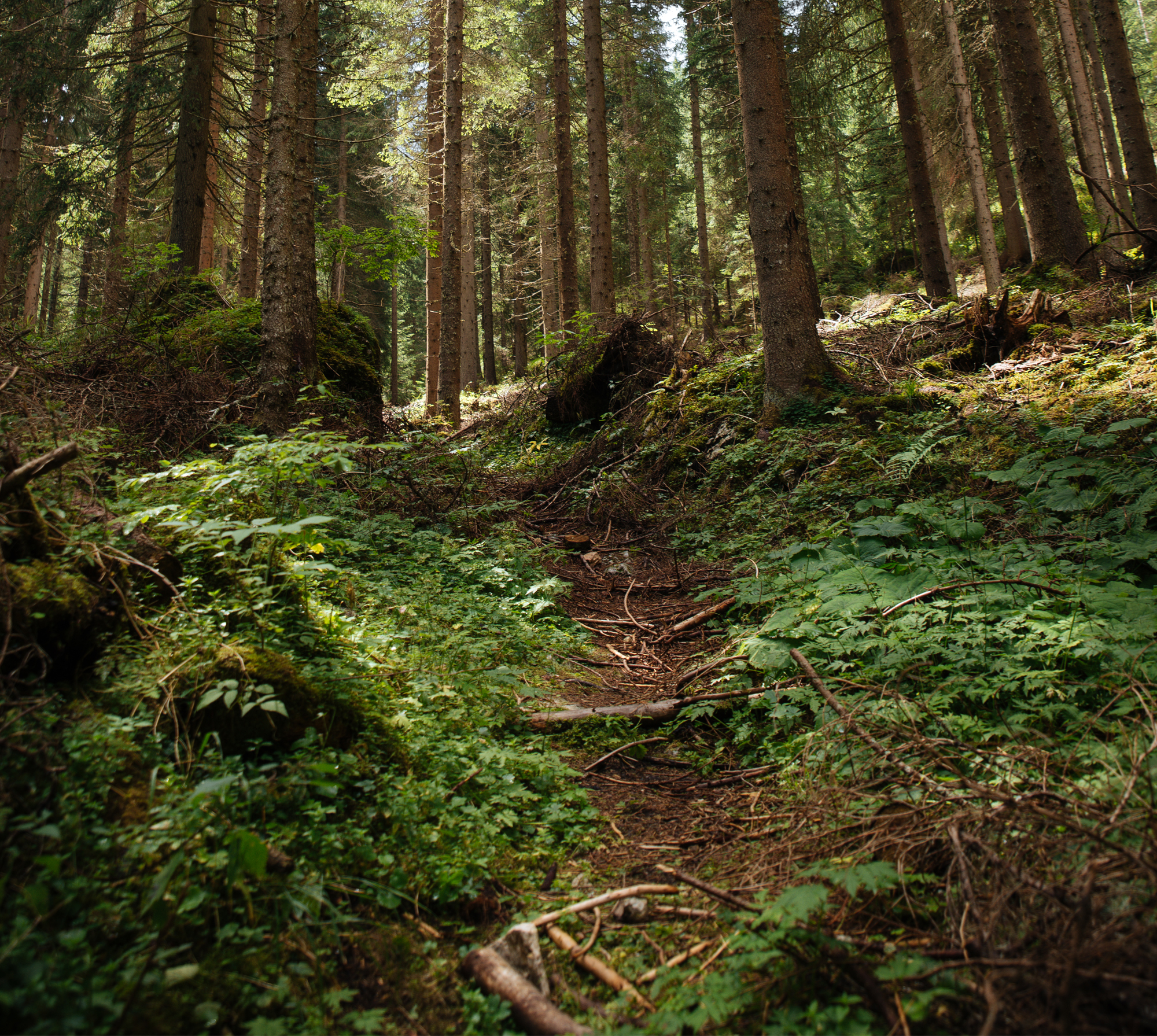
Comprehensive assessment of the condition of Crimean pine (Pinus nigra subsp. pallasiana (Lamb.) Holmboe) stands on eroded lands in the Right-Bank Forest-Steppe of Ukraine
Autorzy
-
Volodymyr Maliuha
State Institution “Institute for Evolutionary Ecology of the National Academy of Sciences of Ukraine”, Department of Environmental Monitoring
Akademika Lebedieva 37, Kyiv, 03-143, Ukraine -
Vasyl Khryk
Bila Tserkva National Agrarian University, Faculty of Agrobiology, Department of Forestry
Soborna Square 8/1, Bila Tserkva, 09-100, Ukraine -
Viktoriia Minder
National University of Life and Environmental Sciences of Ukraine, Education and Research Institute of Forestry and Landscape-Park Management, Department of Landscape Architecture and Phytodesign
Horikhuvatskyi Shliakh str. 19, 03-041, Kyiv1, Ukraine -
Krylov Yaroslav
State Institution “Institute for Evolutionary Ecology of the National Academy of Sciences of Ukraine”, Department of Environmental Monitoring
Akademika Lebedieva 37, Kyiv, 03-143, Ukraine -
Ivan Kimeichuk
Bila Tserkva National Agrarian University, Faculty of Agrobiology, Department of Forestry
Soborna Square 8/1, Bila Tserkva, 09-100, Ukraine
-
Serhii Kovalevskyi
National University of Life and Environmental Sciences of Ukraine, Education and Research Institute of Forestry and Landscape-Park Management, Department of Forest Mensuration and Forest Managemen, Horikhuvatskyi Shliakh
str. 2, 03-041, Kyiv, Ukraine -
Oleksand Sytnyk
Bila Tserkva National Agrarian University, Faculty of Agrobiology, Department of Forestry and Landscape-Park Management
Soborna Square 8/1, Bila Tserkva, 09-100, Ukraine -
Olena Hrynyk
Forest Research Institute, Department of Ecology, Braci Leśnej 3, Sękocin Stary, 05-090 Raszyn, Poland
-
Heorhiy Hrynyk
University of Lodz Branch in Tomaszów Mazowiecki, Department of Forest Sciences
Konstytucji 3 Maja 65/67, 97-200 Tomaszów Mazowiecki, Poland
e-mail: herohiy.hrynyk@filia.uni.lodz.pl
Abstract
The relevance of this study connected with the need to assess the condition of planted stands of Crimean pine (Pinus nigra subsp. pallasiana (Lamb.) Holmboe) established on eroded ravine and gully lands. The objective of this study was comprehensively assess the condition of Crimean pine (Pinus nigra subsp. pallasiana (Lamb.) Holmboe) stands established on eroded ravine and gully lands in the Right-Bank Forest-Steppe of Ukraine by: analysing their silvicultural and mensurational characteristics; evaluating the physical and agrochemical properties of the soils; determining the relationships between stand development and soil-improving processes; and assessing stand condition using an integrated condition index based on a wide range of indicators. The methodology for studying the condition of pine stands was to collect the various indicators data: silvicultural and mensurational data, as well as the physical and agrochemical properties of the soil. The study included the following forestry and inventory indicators: age (years), average height (m), average diameter (cm), density (1.0), and standing volume (m³·ha-1); from soil physical properties: humus horizon depth (cm), active root surface area (cm²), water permeability (mm·min-1), and soil hardness (kg·cm-2); from agrochemical properties – humus content (%), available phosphorus, potassium, and hydrolyzable nitrogen (mg per 100 g of soil). When using indicators with different absolute values, it was planned to convert them to relative values by calculating them based on identical control indicators. Eleven plots of pine stands aged 25 to 55 years with forest management characteristics that were as similar as possible or identical were selected. The studied Crimean pine stands grow in II and III stand site indexes under dry (C1) and fresh mixed broadleaf forests (C2) conditions, with timber productivity ranging from 72 to 334 m³·ha-1. They fulfill their designated erosion control function by halting the progression of erosion processes through the regulation of soil permeability and hardness, between which an inversely proportional relationship has been observed. They contribute to improving the properties of eroded soils by increasing the integral soil improvement index from 120% to 180%. Crimean pine stands have high overall health indices, which do not exceed 20%; at the same time, they differ from one another, exhibiting certain variations. The method of comprehensive assessment of stand health, based on the overall index, provides an unquestionable opportunity to take into account a wide range of indicators that influence the characteristics of their growth and development.
Keywords
| DOI | 10.2478/ffp-2026-0011 |
|---|---|
| Source | Folia Forestalia Polonica, Series A – Forestry, 2026, Vol. 68 (3), 137–151 |
| Print ISSN | |
| Online ISSN | 2199-5907 |
| Type of article | Original article |
| Original title | Comprehensive assessment of the condition of Crimean pine (Pinus nigra subsp. pallasiana (Lamb.) Holmboe) stands on eroded lands in the Right-Bank Forest-Steppe of Ukraine |
| Publisher | © 2026 Author(s). This is an open access article licensed under the Creative Commons Attribution-NonCommercial-NoDerivs License (http://creativecommons.org/licenses/by-nc-nd/4.0 |
| Date | 07/09/2026 |
- Maliuha V., Khryk V., Minder V., Yaroslav K., Kimeichuk I., Kovalevskyi S., Sytnyk O., Hrynyk O., Hrynyk H. Comprehensive assessment of the condition of Crimean pine (Pinus nigra subsp. pallasiana (Lamb.) Holmboe) stands on eroded lands in the Right-Bank Forest-Steppe of Ukraine
- Marozau A., Pilch K., Borowik P., Oszako T. The age of mature Abies alba Mill. trees in the Białowieża Forest and the onset of their seed production
- Raspopina S., Pyvovar T., Buksha I., Pasternak V., Suska A. Using edaphic parameters to validate forest site conditions on the plots of Ukrainian National Forest Inventory
- Bondar O., Lisnichuk A., Tsytsiura N., Panasenko R. Structural and functional analysis of forest stands in the Kremenets Botanical Garden (Ukraine): peculiarities of natural regeneration and rare species protection
- Szast M. The role of forestry education in shaping professional competencies: students’ perspectives on forest functions and professional challenges