

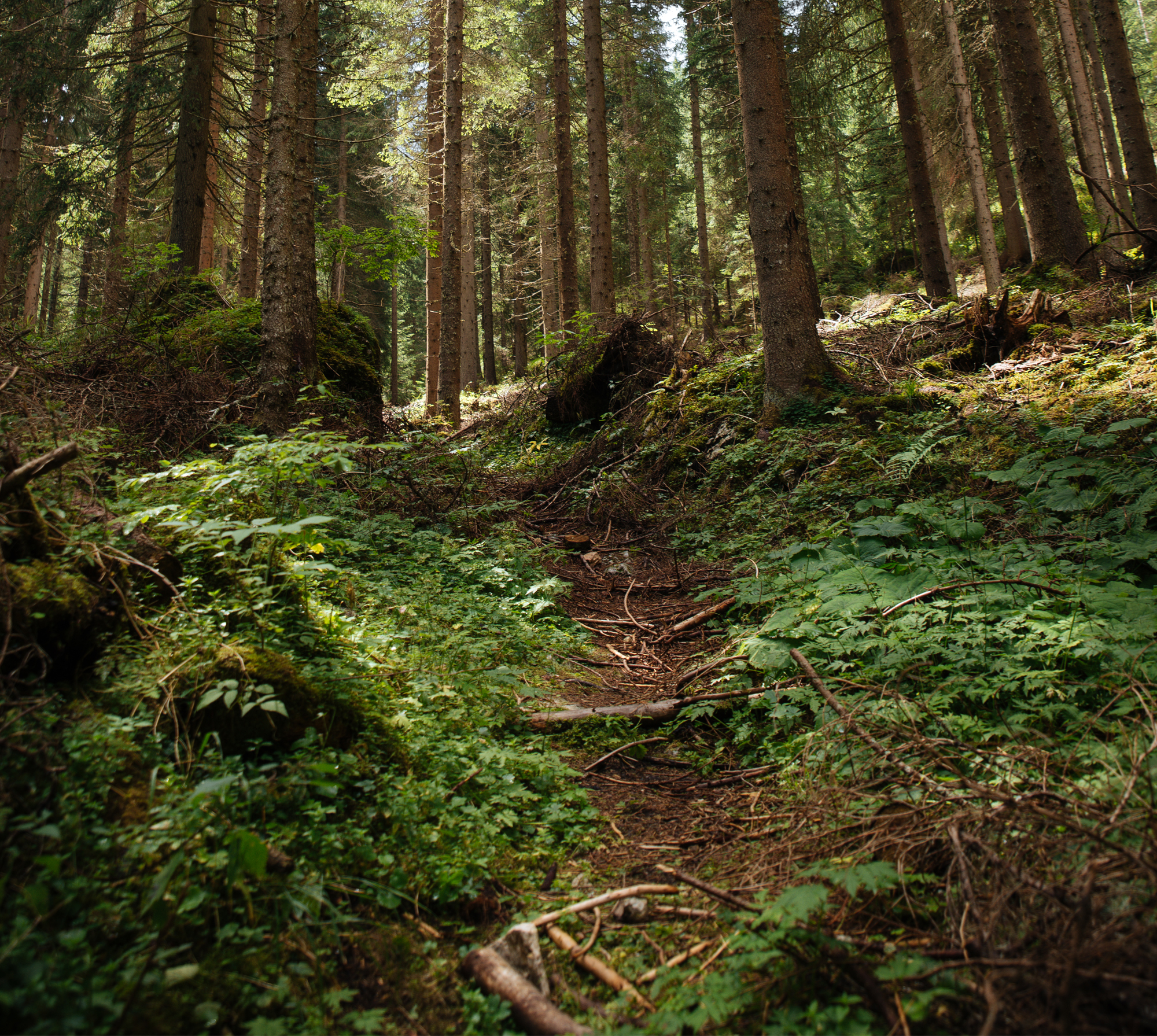
Structural and functional analysis of forest stands in the Kremenets Botanical Garden (Ukraine): peculiarities of natural regeneration and rare species protection
Autorzy
-
Oleksandr Bondar
West Ukrainian National University, Department of Ecology and Health Protection
46009, 11 Lvivska St., Termopil, Ukraine
e-mail: olexandr.bondar91@gmail.com -
Antonina Lisnichuk
Kremenets Botanical Garden
47003, 5 Botanichna St., Kremenets, Ukraine -
Nelia Tsytsiura
Kremenets Taras Shevchenko Regional Academy of Humanities and Pedagogy, Department of Biology and TeachingMethods
47003, 1 Lyceina St., Kremenets, Ukraine -
Ruslana Panasenko
Kremenets Botanical Garden
47003, 5 Botanichna St., Kremenets, Ukraine
Abstract
The Kremenets Botanical Garden, located in the Ternopil region, covers 200 hectares and serves as an important nature reserve in Ukraine. It is divided into four zones: exposition (59.2%), scientific (25.1%), protected (10.6%), and administrative (5.1%). The exposition zone showcases the natural diversity of the Вotanical garden, while also fulfilling educational and recreational functions. The scientific zone is dedicated to research and development, providing a space for scientific activities. The protected zone is designated for the preservation of natural ecosystems, ensuring their conservation. The administrative zone supports the operational functions of the Вotanical Garden. The Вotanical Garden’s forests are represented by three different types. The fresh fertile hornbeam-oak forest type covers 68.0% of the area and forms the core of the garden’s forest ecosystems. The fresh, relatively fertile hornbeamoak-pine forest type accounts for 17.8%, while the dry, relatively fertile forest type is the least represented, covering just 0.5%. Natural regeneration of European beech (Fagus sylvatica L.) was studied on nine temporary sample plots, with additional planting recommended for areas with insufficient natural regeneration. The observed regeneration was determined to be viable, indicating favourable growth conditions.
The soil cover is diverse, consisting of sandy loam (47.5%), light loamy (35.0%), clay (10.0%), and sandy (5.0%) soils, along with mine rock (2.5%). Sandy loam and light loamy soils offer the best conditions for plant growth, while degraded and sandy areas require reclamation to improve their suitability for vegetation.
The Kremenets Botanical Garden is home to 12 plant species listed in the Red Data Book of Ukraine and 17 regionally rare species. It also hosts three rare plant communities: Festuceta pallentis Host, Carex humilis Leyss., and Querceta roboris L., dominated by Hedera helix L., which play an essential role in maintaining biodiversity. This multifunctional garden is a key center for conservation, research and recreation.
Keywords
| DOI | 10.2478/ffp-2026-0014 |
|---|---|
| Source | Folia Forestalia Polonica, Series A – Forestry, 2026, Vol. 68 (3), 173–187 |
| Print ISSN | |
| Online ISSN | 2199-5907 |
| Type of article | Review article |
| Original title | Structural and functional analysis of forest stands in the Kremenets Botanical Garden (Ukraine): peculiarities of natural regeneration and rare species protection |
| Publisher | © 2026 Author(s). This is an open access article licensed under the Creative Commons Attribution-NonCommercial-NoDerivs License (http://creativecommons.org/licenses/by-nc-nd/4.0 |
| Date | 07/09/2026 |
- Maliuha V., Khryk V., Minder V., Yaroslav K., Kimeichuk I., Kovalevskyi S., Sytnyk O., Hrynyk O., Hrynyk H. Comprehensive assessment of the condition of Crimean pine (Pinus nigra subsp. pallasiana (Lamb.) Holmboe) stands on eroded lands in the Right-Bank Forest-Steppe of Ukraine
- Marozau A., Pilch K., Borowik P., Oszako T. The age of mature Abies alba Mill. trees in the Białowieża Forest and the onset of their seed production
- Raspopina S., Pyvovar T., Buksha I., Pasternak V., Suska A. Using edaphic parameters to validate forest site conditions on the plots of Ukrainian National Forest Inventory
- Bondar O., Lisnichuk A., Tsytsiura N., Panasenko R. Structural and functional analysis of forest stands in the Kremenets Botanical Garden (Ukraine): peculiarities of natural regeneration and rare species protection
- Szast M. The role of forestry education in shaping professional competencies: students’ perspectives on forest functions and professional challenges