

Obce gatunki drzew leśnych a hodowla lasu w Polsce
Non-native tree species and silviculture in Poland
Autorzy
-
Michał Magnuszewski
Dyrekcja Generalna Lasów Państwowych,
Grójecka 127,
02-381 Warszawa
Abstrakt
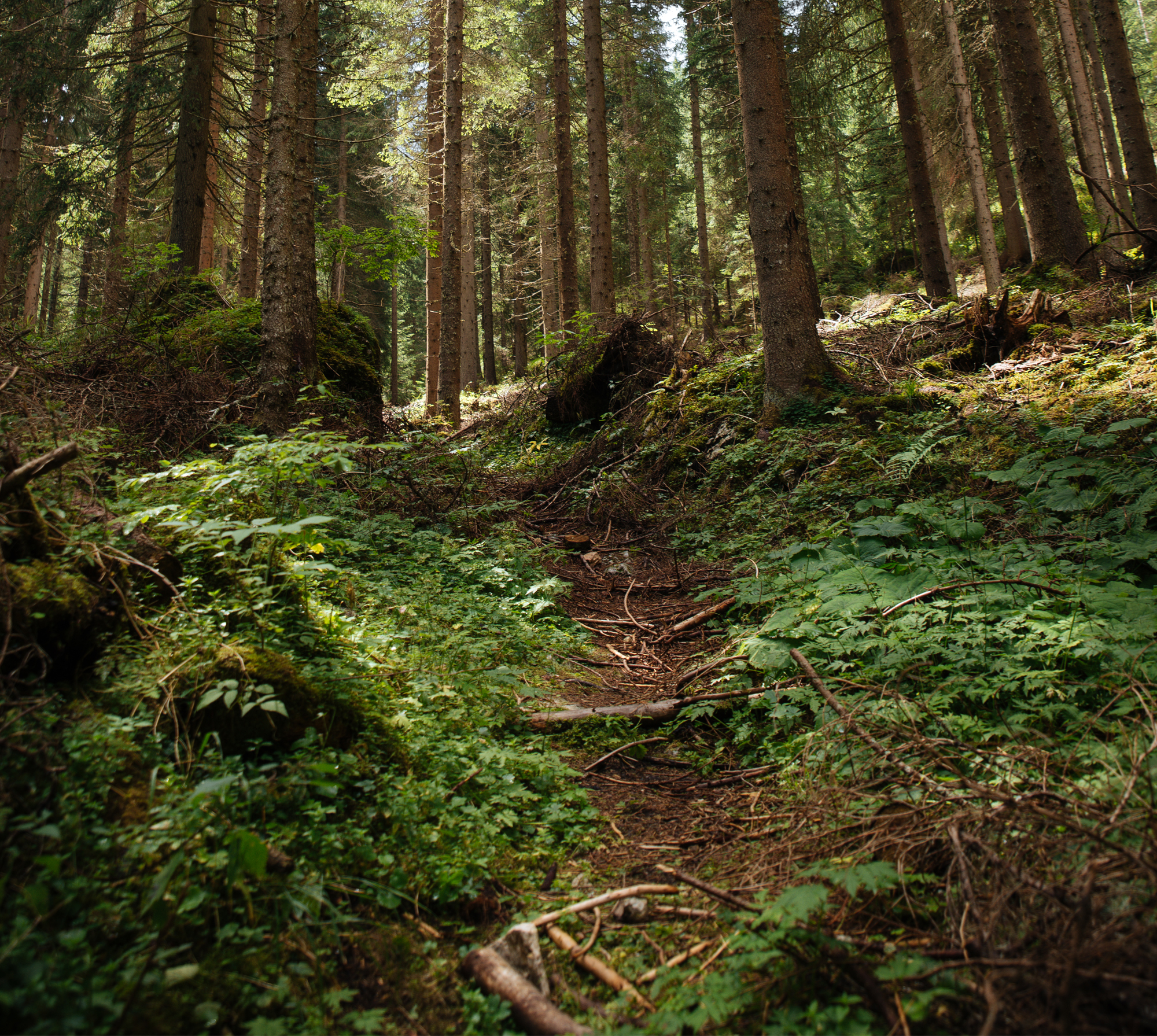
Polish forestry, as part of sustainable and multifunctional forest management, primarily uses native forest tree species (Fig. 1). From the perspective of forest silviculture, the most important issue in commercial forests is the cultivation objective and its implementation. The breeding objective is mainly determined by habitat conditions, including soil and climate. The optimal species composition is selected according to the fertility of the habitat. In Polish forests, alongside nearly 15 native forest tree species of economic importance, there are about 30 introduced species, most of which were introduced experimentally in the 19th century.
Prussian forestry, represented by Professor Schwappach from Eberswalde, pioneered the introduction of alien tree species in Polish forests. Between 1886 and 1895, they conducted a large-scale campaign to assess the suitability of 46 tree species, mainly from North America and Japan, for Central European forest conditions. The invaluable aspect of these experiments lies in over 130 years of acclimatisation to local habitat conditions and in the fact that many of these alien species, growing in mixture with various native forest tree species, now allow assessment in terms of cultivation and ecology. Currently, in the face of global climate change, many European countries are experiencing the decline of existing species, including spruce, which is also disappearing from foothill and mountain regions. There is now an urgent search for new forest tree species and their varieties in order to create forests that are resistant to progressive climate change and to test new origins of alien species.
With numerous native species present, it is worth noting that the share of introduced species that have acquired specific functions in Polish forests – namely, Douglas fir (Pseudotsuga menziesii (Mirb.) Franco), black locust (Robinia pseudoacacia L.), and red oak (Quercus rubra L.) – is negligible compared to the share of native forest tree species in Poland, amounting to only a few percent of the total area. Species introduced in Poland are characterised by their widespread distribution throughout the country. Although they occur in many habitat types, to achieve the required wood production, they must be located in suitable and strictly defined habitat conditions. Black locust occupies the largest area among the introduced species, with nearly 10,000 ha in stands covering over 270,000 ha, with an average share of approximately 3.5%. The second largest in terms of area is red oak, which occupies almost 14,000 ha in stands covering over 80,000 ha, with an average share of 0.16%.
Both black locust and red oak are included in the national Polish list of invasive species due to certain undesirable characteristics: black locust exhibits significant regrowth, while red oak produces leaf fall that, due to poor decomposition, can negatively impact the soil. It is important to refer to the definitions of alien species and invasive alien species. According to Regulation (EU) No 1143/2014 of the European Parliament and of the Council, each Member State shall, based on long-term observation and scientific research, determine which species are invasive; this list does not include woody species.
Douglas fir is a particularly demanding species in forest silviculture when young, as it is not resistant to late and winter frosts and is readily browsed by deer. On the other hand, several factors favour its introduction.. The first undeniably positive characteristic of Douglas fir is its high productivity (Fig. 4). At 100 years of age, Douglas fir has approximately twice the stock of pine trees in the initial assessment. Given its productivity and high acclimatisation ability, it would be worthwhile to analyse the possibilities of expanding the habitat variants into which it can be introduced as an admixture species.
Douglas fir should not have a significant impact on native forest phytocenoses and is acceptable in Polish “Zasady Hodowli Lasu” (2023) [Principles of Silviculture] in stands amounting to 10% in all forest regions. Other alien species were not included in this document.
Polish forests have retained those introduced species that are best acclimatised to local habitat conditions. In addition to the three species mentioned above, which have some forestry use, there are also numerous other species that foresters regard primarily as experimental. One example is the area covered by western redcedar, whose productivity in suitable habitats exceeds that of Douglas fir and whose ability to form mixed stands with native species appears to be the highest. However, in the context of ongoing climate change, it is necessary to seek species with lower rainfall requirements and greater tolerance of higher temperatures. These are mainly species that prefer southern geographical locations. Among others, these include the sweet chestnut (Castanea sativa Mill.), Turkey oak (Quercus cerris L.), and cork oak (Quercus suber L.). So far, these species have been treated as park, ornamental, or botanical garden collections. In Poland, species such as cork oak and maritime pine (Pinus pinaster Aiton) are also discussed, but no large-scale programmes have been undertaken to test these species, and the possibility of cultivating them is still considered only in theory and with great caution. At present, our geographical location protect us from the effects of climate change, but if anomalies such as insufficient and uneven rainfall throughout the year persist, we will soon have to seek alternatives to our native tree species.
Słowa kluczowe
| DOI | 10.48538/lpb-2026-0007 |
|---|---|
| Source | Leśne Prace Badawcze / Forest Research Papers, 2026, Vol. 86: 74-81 |
| Print ISSN | |
| Online ISSN | 2082-8926 |
| Type of article | Discussion article |
| Original title | Obce gatunki drzew leśnych a hodowla lasu w Polsce |
| Publisher | © 2026 Author(s). This is an open access article licensed under the Creative Commons Attribution-NonCommercial-NoDerivs License (http://creativecommons.org/licenses/by-nc-nd/4.0/) |
| Date | 18 May 2026 |
- Gutowski J., Hilszczański J., Kurzawa J., Lasoń A., Plewa R., Górski P., Jędryczkowski W., Królik R., Tatur-Dytkowski J. Kózkowate (Coleoptera: Cerambycidae) Biebrzańskiego Parku Narodowego i jego otuliny
- Gutowski J., Hilszczański J., Lasoń A., Królik R., Wanat M., Jędryczkowski W., Tatur-Dytkowski J. Bogatkowate (Coleoptera: Buprestidae) Biebrzańskiego Parku Narodowego i jego otuliny
- Stańczyk S. Określenie defoliacji świerka pospolitego na podstawie zobrazowań lotniczych pozyskanych przy pomocy bezzałogowego statku powietrznego
- Gutowski J., Hołowiński M., Miłkowski M. Przeziernik węgierski Chamaesphecia hungarica (Tomala, 1901) (Lepidoptera: Sesiidae) – występowanie w Polsce i uwagi dotyczące biologii
- Dziuk A., Paradysz J., Plewa R. Możliwości wykorzystania atraktantów do monitorowania liczebności populacji drzewotocza japońskiego Xylosandrus germanus (Bldf., 1894) w lasach gospodarczych
- Chmura D. Porównanie wzrostu i produkcyjności jodły olbrzymiej, świerka pospolitego i modrzewia europejskiego w Nadleśnictwie Milicz
- Pusz W., Baturo-Cieśniewska A. Grzyby zasiedlające bagno zwyczajne (Ledum palustre L.) w Wigierskim Parku Narodowym
- Turzański M. Skład wiosenno-letniego pokarmu myszołowa Buteo buteo z terenu Ojcowskiego Parku Narodowego
- Korzeniewski K., Wysocka-Fijorek E. Modelowanie węgla w ekosystemach leśnych – przegląd narzędzi
- Referowska E. Czterdzieści lat strefowej ochrony gatunków w polskich lasach Część 2. Zagadnienia przyrodnicze
- Grzywacz A. Dokonania i udział Lasów Państwowych w ochronie przyrody
- Krzysztofiak L. Występowanie i rola ekologiczna grzyba Puccinia komarovii w Polsce – konsekwencje dla ochrony przyrody